
By GM Ulvi Bajarani, Founder and Head Coach of Azeri Chess Academy.
Once a child knows how the pieces move and can finish a legal game, I would start with two things: seeing checks and captures, then working out what happens after them. A child can know exactly how a bishop moves and still miss that it attacks their rook. Another child may see the capture immediately but forget that the rook can be recaptured. Those are different problems, and they need different practice.
Set up the three positions below on a board or paste the FEN into a board editor. Let your child explain their choices before you show the answer. There is no need to time them.
1. Find the checks before deciding which one to play
Ask: White to move. Can you find every legal check? Which one ends the game?
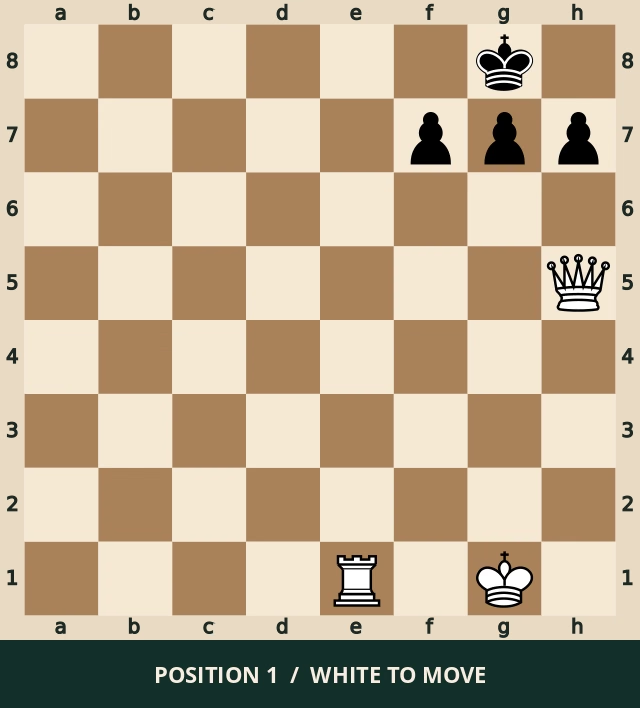
Position (FEN): 6k1/5ppp/8/7Q/8/8/8/4R1K1 w - - 0 1
Answer: White have three checks: Re8#, Qxf7+ and Qxh7+. After Qxf7+, Black can play Kxf7. After Qxh7+, Black can play Kxh7. Re8# is checkmate.
What to watch for: Did your child stop after finding the first check, or did they keep looking? If they found a queen check and wanted to play it, ask them to take Black’s side and show a legal reply. The habit to build is to see the candidates and test them.
2. Follow the capture through the recapture
Ask: White to move. The rook can take either of two pawns. Which capture wins a pawn safely?
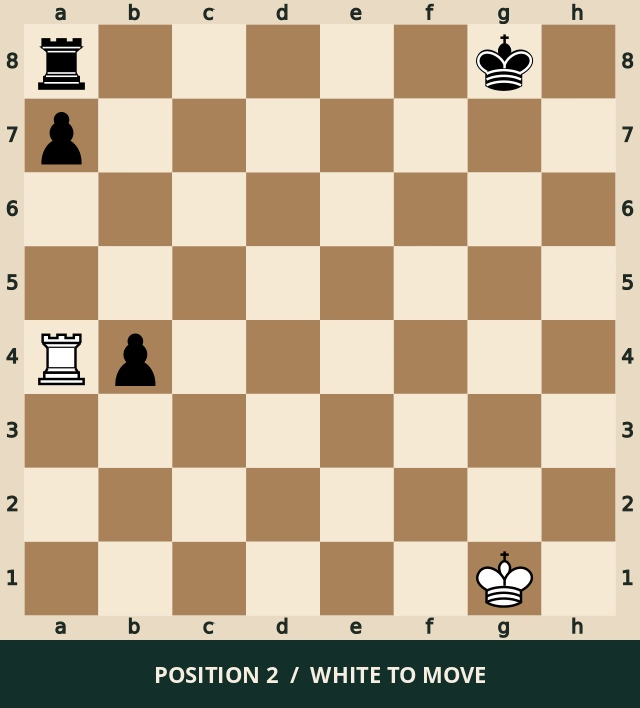
Position (FEN): r5k1/p7/8/8/Rp6/8/8/6K1 w - - 0 1
Answer: Rxb4 wins the b-pawn without an immediate recapture. After Rxa7?, Black can play Rxa7. White have traded a rook for a pawn.
What to watch for: If your child sees both captures but misses the reply, have them move the rook and then look at the new position from Black’s side. Ask them to count what was taken after the exchange. If they missed one capture entirely, work on seeing the rook’s lines before asking them to calculate further.
3. Check what the opponent can do next
Ask: White to move. What happens if White play a3 and do nothing about the kingside?
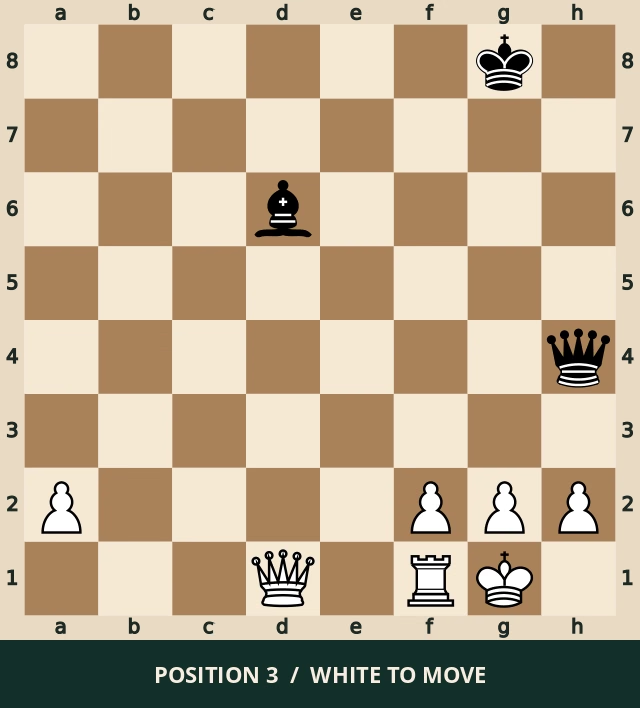
Position (FEN): 6k1/8/3b4/8/7q/8/P4PPP/3Q1RK1 w - - 0 1
Answer: After 1.a3?? Qxh2#, Black’s bishop on d6 protects the queen on h2. Compare 1.g3, which cuts the bishop’s line to h2 as well as attacking the queen. If Black now try 1…Qxh2+, White can play 2.Kxh2.
What to watch for: Can your child explain why the same capture is mate in one position and loses the queen in the other? Look for the change on the board: the pawn on g3 blocks the bishop. Recognizing a threat like this is worth teaching early. I would spend more time on creating threats once the child can reliably find and evaluate both sides’ checks and captures.
Bring the habit into a real game
After a slow practice game, choose one position where your child missed something. Don’t tell them it is a puzzle or name the tactic. Ask:
- What did the last move change?
- What checks and captures can you see?
- After your intended move, what is your opponent’s strongest reply?
If the child misses moves, simplify the position and practice spotting them. If they see the moves but misjudge the result, work through one reply and recapture at a time. When they do both consistently, start asking them to create a concrete threat and explain what would happen if it were ignored.
For more practice, see How to Evaluate Captures in Chess and Chess Tactics Explained with Examples. If you’re unsure where your child is getting stuck, you can request a free 15-minute online chess assessment.
Further reading for parents and coaches: Steps Method, Step 1 and Exeter Chess Club’s checks-and-captures exercises.