A clear foundation for understanding the board, the pieces, and the habits that help new players improve.
Learning chess is one of the most rewarding skills you can develop. It is a game that combines strategy, creativity, patience, and problem-solving in an activity that people of all ages can enjoy. Whether you are a child learning for the first time or an adult who has always wanted to play, this beginner chess guide will help you understand the fundamentals and build a strong foundation.
The beauty of chess is that it is easy to learn but offers a lifetime of opportunities to improve. Every game teaches you something new, and every challenge helps you become a stronger player.
Understanding the Chessboard
Before learning how the pieces move, it is helpful to become familiar with the chessboard itself.
A chessboard consists of 64 squares arranged in an 8-by-8 grid. Half of the squares are light, and the other half are dark. When the board is positioned correctly, each player should have a light-colored square in the lower-right corner.
The eight horizontal rows of squares are called ranks, while the eight vertical columns are called files. A diagonal is a connected line of squares of the same color that touch one another at their corners.
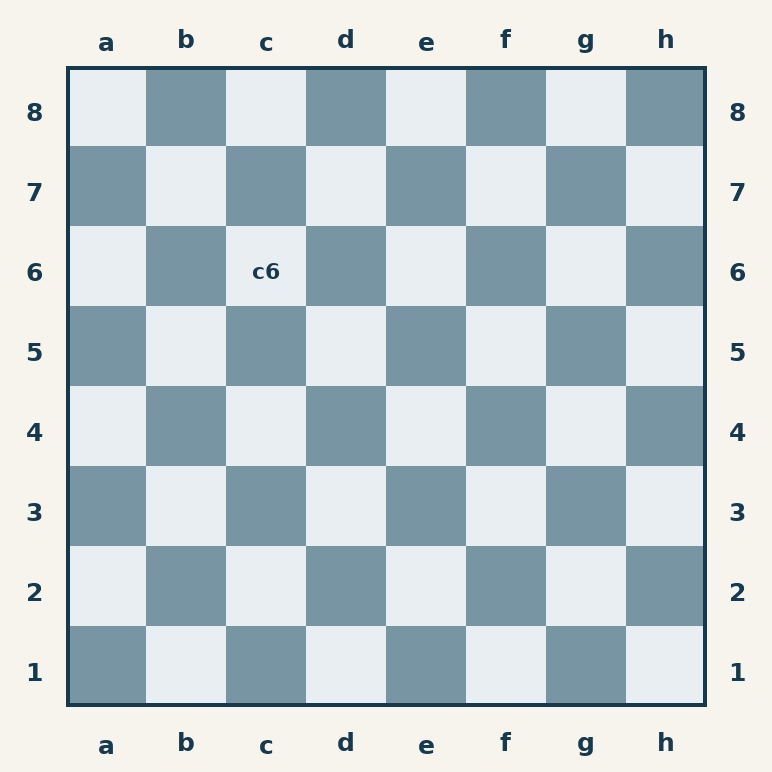
Chessboard coordinates: files a–h and ranks 1–8; c6 is labeled.
Every square on the board has its own coordinate. The files are identified by the lowercase letters a through h, while the ranks are numbered 1 through 8. When naming a square, the file letter comes first, followed by the rank number.
For example, the square located at the intersection of the c-file and the sixth rank is called c6.
Learning chessboard coordinates will make it easier to follow lessons, read chess books, record games, and discuss positions with other players.
Understanding the Chess Pieces
Before you can develop winning strategies, it is important to understand how each chess piece moves.
At the beginning of a game, each player has 16 pieces: one king, one queen, two rooks, two bishops, two knights, and eight pawns.
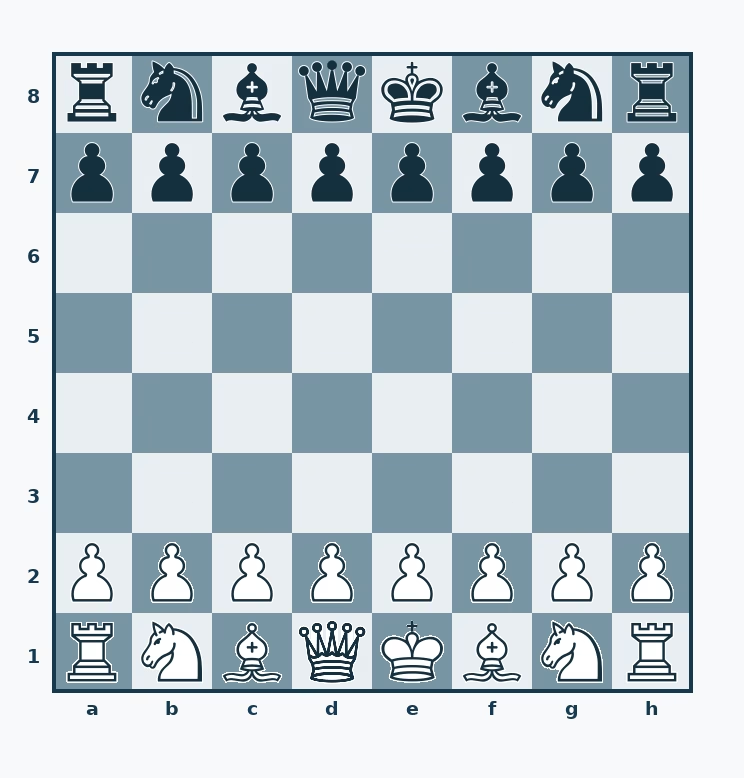
The standard starting position, shown from White’s perspective.
A piece makes a capture by removing an opponent’s piece from the board and moving onto the square that the captured piece occupied. Every piece except the king can be captured. The king is never actually captured because the game ends when it is checkmated.
The following order can make learning the movements of the pieces easier.
The Rook
The rook moves any number of squares horizontally or vertically. It cannot jump over either its own pieces or an opponent’s pieces.
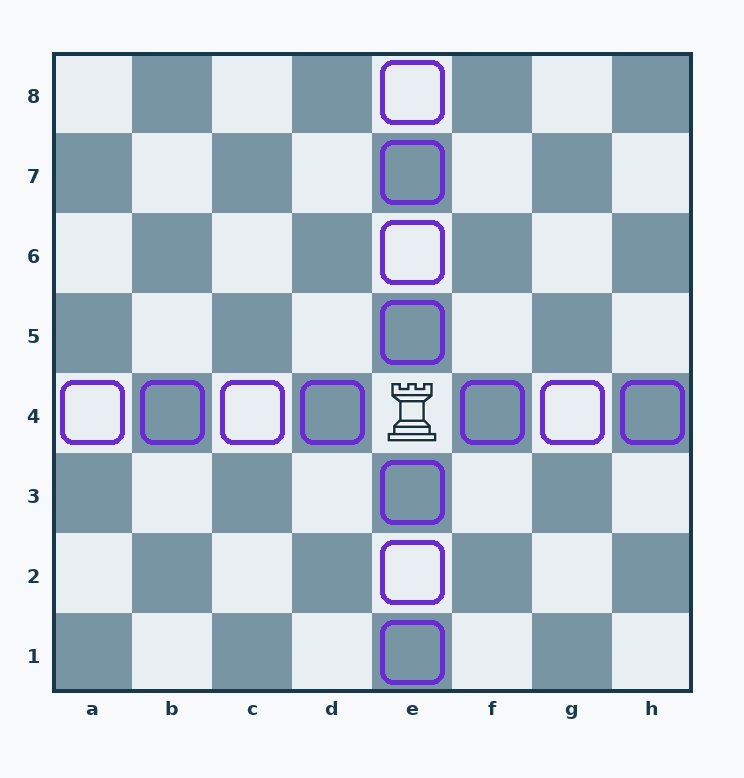
Rook on e4: violet-outlined squares show every legal destination on an otherwise empty board.
If an opponent’s piece is located in the rook’s path, the rook may capture it by moving onto its square. However, the rook cannot continue moving beyond that piece during the same move.
Rooks become especially powerful during the endgame, when fewer pieces remain and more files and ranks are open.
The Bishop
The bishop moves any number of squares diagonally. Like the rook, it cannot jump over its own pieces or an opponent’s pieces.
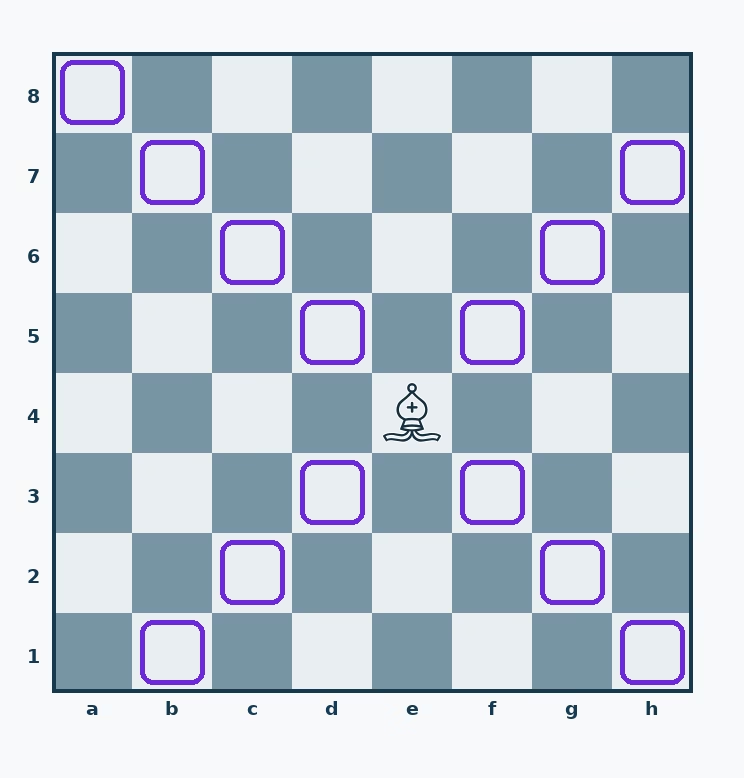
Bishop on e4: violet-outlined squares show every legal destination on an otherwise empty board.
Each bishop remains on squares of the same color throughout the entire game. A bishop that begins on a light square will always move along light squares, while a bishop that begins on a dark square will always remain on dark squares.
Because the two bishops control different-colored squares, learning how to coordinate them is an important skill.
The Queen
The queen is the most powerful piece on the board. She can move any number of squares horizontally, vertically, or diagonally.
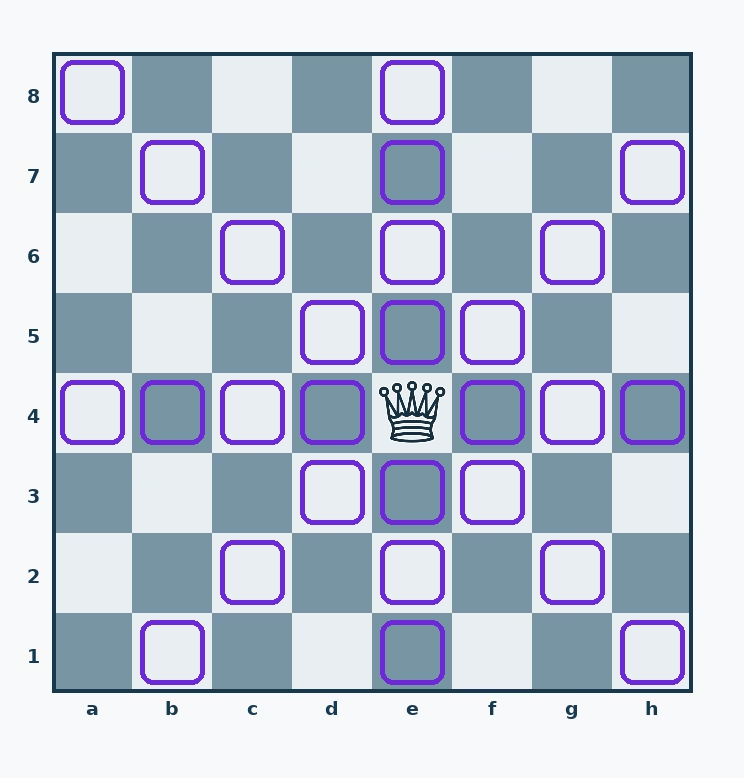
Queen on e4: violet-outlined squares show every legal destination on an otherwise empty board.
The queen’s movement combines the movements of the rook and the bishop. However, like those pieces, she cannot jump over her own pieces or an opponent’s pieces.
Her wide range of movement makes her a valuable attacking and defensive weapon. Nevertheless, beginners should be careful not to bring the queen into the game too early, since the opponent may attack her while developing other pieces.
The King
The king is the most important piece on the board. Like the queen, it can move horizontally, vertically, or diagonally, but only to one adjacent square at a time.
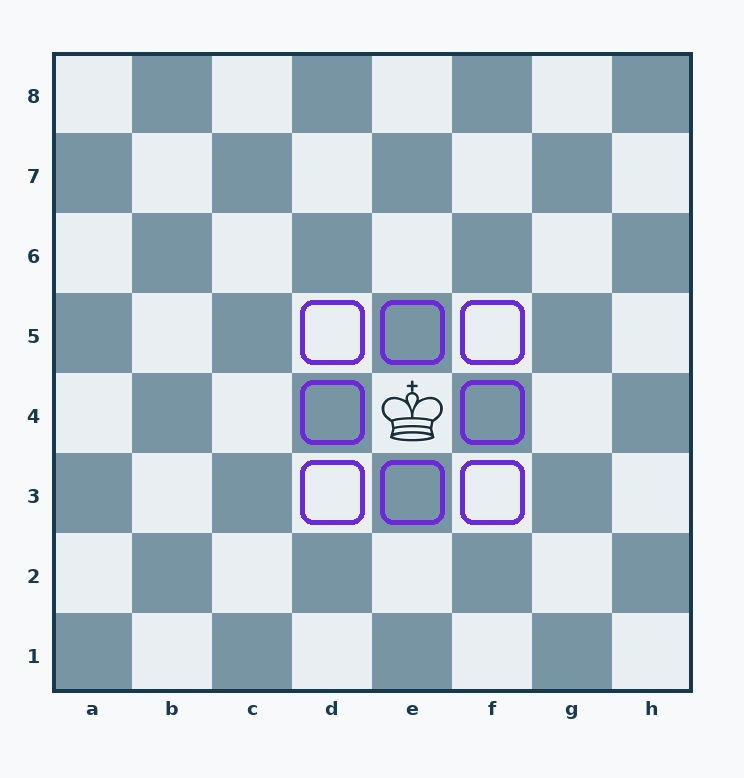
King on e4: violet-outlined squares show every legal destination on an otherwise empty board.
The king may not move onto a square controlled by an opponent’s piece. It is also illegal to leave your king under attack or make a move that exposes your king to an attack.
The king is never captured. When a king is attacked and there is no legal way to escape the attack, the position is checkmate and the game is over.
Your main objective is to protect your own king while creating threats against your opponent’s king.
The Knight
The knight is unique because it moves from one square to another in an “L” shape. Its move may be understood as two squares upward or downward followed by one square left or right, or one square upward or downward followed by two squares left or right.
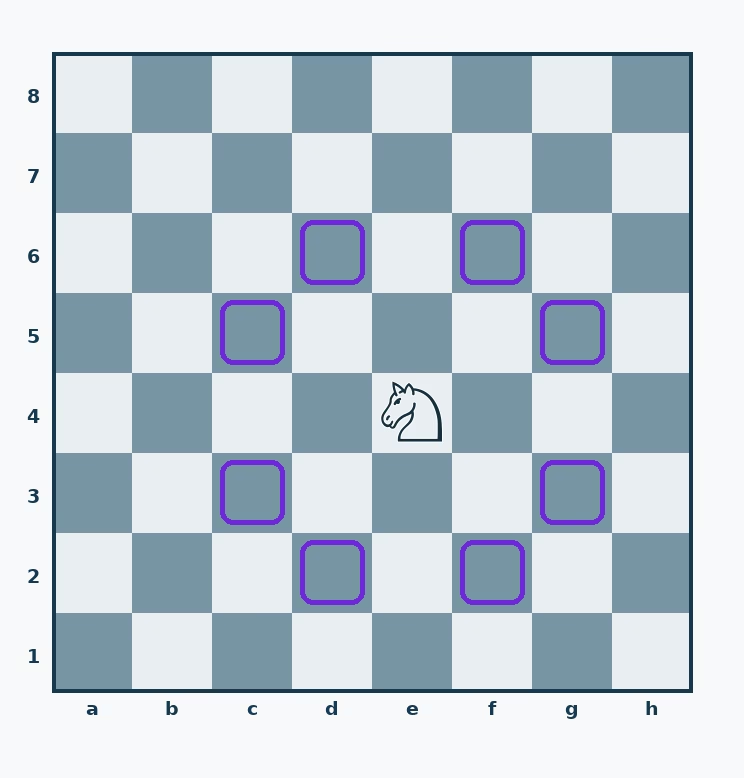
Knight on e4: violet-outlined squares show every legal destination on an otherwise empty board.
Unlike rooks, bishops, and queens, the knight does not travel along a rank, file, or diagonal. It moves directly from its starting square to its destination square. For this reason, pieces located between those two squares do not block its movement.
The knight is the only piece that can jump over other pieces. However, it cannot land on a square occupied by one of its own pieces. It may land on a square occupied by an opponent’s piece and capture it.
Knights often surprise beginners because of their unusual movement and their ability to attack pieces from unexpected positions.
The Pawn
The pawn usually moves forward one square at a time. From its starting position, however, it may move either one or two squares forward.
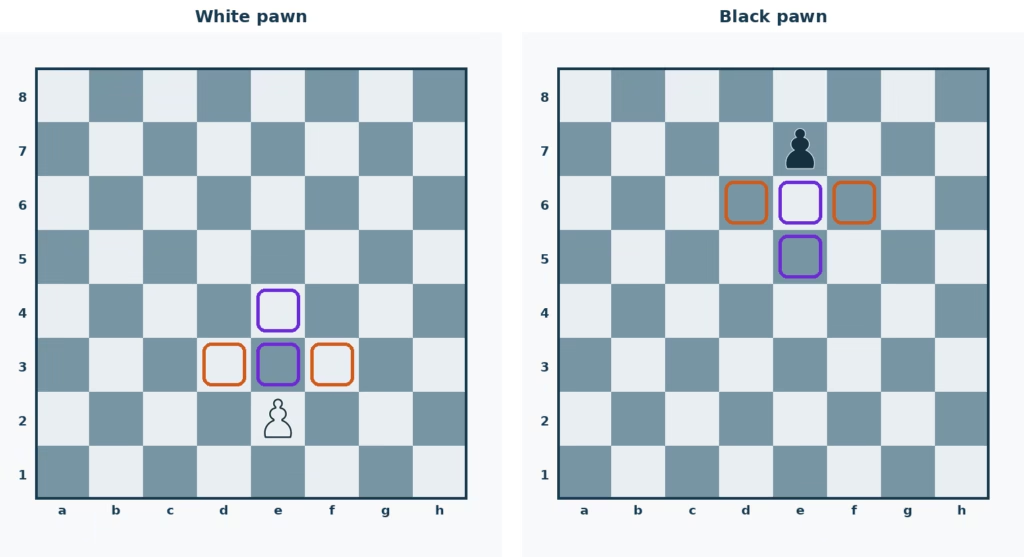
Pawns from their starting squares: violet outlines show forward moves; orange outlines show possible captures.
White’s pawns begin on the second rank, while Black’s pawns begin on the seventh rank. A pawn may move two squares only when it is still on its original square and both squares in front of it are unoccupied.
A pawn cannot move forward onto a square occupied by either its own piece or an opponent’s piece. Unlike the other pieces, pawns do not capture in the same direction in which they move. They capture an opponent’s piece by moving one square diagonally forward.
Although pawns are the smallest pieces, they play a critical role in controlling space, protecting other pieces, and limiting the opponent’s options. A White pawn that reaches the eighth rank, or a Black pawn that reaches the first rank, must be promoted. The player may choose to promote the pawn to a queen, rook, bishop, or knight.
Understanding how each piece works is the first step toward becoming a confident chess player.
Understanding the Strength of the Pieces
Once you understand how the pieces move, it is useful to learn their approximate material values. These values can help you evaluate captures and exchanges:
- Pawn: 1 point
- Knight: approximately 3 points
- Bishop: approximately 3 points
- Rook: 5 points
- Queen: 9 points
- King: no numerical value
The bishop is often considered slightly more valuable than the knight, especially in open positions. However, their actual strength depends on the position. Knights may be especially effective in closed positions, while bishops usually become stronger when open diagonals are available.
The king has no defined material value because it cannot be exchanged or captured. Losing the king through checkmate means losing the game.
These numbers are helpful guidelines, but they should not be followed mechanically. The activity of the pieces, king safety, pawn structure, and tactical possibilities may be more important than a small material difference.
Learn the Basic Rules
Every chess game begins with the same starting position, but each game quickly becomes unique.
The objective is to place your opponent’s king in checkmate, meaning that the king is under attack and there is no legal way to escape.
When a king is attacked but can still escape, block the attack, or capture the attacking piece, the king is in check rather than checkmate. A player whose king is in check must respond to the threat immediately.
As you learn, you will also become familiar with important concepts such as castling, en passant, pawn promotion, draws, and stalemate. While these rules may seem overwhelming at first, they quickly become second nature through regular practice.
Do not worry about memorizing everything immediately. Focus on understanding the fundamentals and build your knowledge one game at a time.
Opening Principles Every Beginner Should Know
Many beginners believe they need to memorize dozens of opening variations. In reality, understanding basic opening principles is much more valuable.
The center of the chessboard consists of the four squares e4, e5, d4, and d5. Try to fight for control of these squares by occupying them with your pawns or controlling them with your pieces.
Develop your knights and bishops early so they can participate in the game. Knights are often developed before bishops because their best opening squares are usually easier to identify. However, this is a general guideline rather than a rule that must be followed in every position.
Avoid moving the same piece several times without a good reason. Each unnecessary move may allow your opponent to bring another piece into the game.
You should also avoid developing your queen too early. Because the queen is so valuable, your opponent may attack her and gain time while developing other pieces.
Finally, make your king safe early. This is usually accomplished through castling, which protects the king while helping one of the rooks enter the game.
These simple habits will give you solid positions regardless of which opening you choose to play.
As your skills improve, you can begin learning specific openings that match your playing style.
Practice the Right Way
Improvement does not come from simply playing hundreds of games. The most successful players combine playing with purposeful practice.
Spend time solving tactical puzzles to improve your pattern recognition and calculation. Review your games to understand why you won or lost, and do not be afraid to analyze your mistakes.
Try to play against opponents who are near your current level. This may include players who are slightly stronger, approximately equal, or slightly less experienced. Stronger opponents will challenge you, while balanced games will give you opportunities to apply what you have learned.
Even short daily practice sessions are usually more effective than occasional marathon sessions. Consistency is one of the biggest keys to long-term improvement.
Why Learning From a Coach Accelerates Improvement
There are countless books, videos, and online lessons available today. While these resources are valuable, they cannot always identify your personal strengths and weaknesses.
A qualified chess coach watches your games, explains your mistakes, answers your questions, and creates a training plan based on your current ability and goals.
Instead of wondering what to study next, you receive structured guidance that helps you improve more efficiently. A coach can also correct misunderstandings before they become long-term habits.
Whether your goal is to win local tournaments, increase your online rating, or simply enjoy the game more, personalized coaching helps you focus on the areas that matter most.
Stay Patient and Enjoy the Journey
Every strong chess player was once a beginner. Improvement takes time, and every game—whether you win or lose—is an opportunity to learn.
Celebrate small victories along the way. Perhaps you recognize a tactical pattern that you previously missed, successfully apply an opening principle, or play a stronger endgame than you did a month ago. These milestones are signs that you are progressing.
Mistakes are a natural and necessary part of learning chess. Instead of becoming discouraged by them, try to understand what happened and what you could do differently in a future game.
The more you enjoy learning, the more motivated you will be to continue improving.
Begin Your Chess Journey Today
This beginner chess guide covers the essential building blocks of the game, but the fastest way to improve is through structured instruction and consistent practice.
At Azeri Chess Academy, we help beginners build a strong foundation while developing confidence, critical thinking, and a lifelong appreciation for chess. Whether you prefer private lessons or online coaching, our personalized approach is designed to help you succeed from your very first game.
Join Azeri Chess Academy today and start your chess journey with expert guidance designed to help you improve with confidence.